
Speed is fundamental to motor racing, but endurance competition demonstrates why speed alone is not enough. The fastest car over a single lap does not automatically become the strongest endurance competitor. These races require teams to cover a predetermined distance or travel as far as possible within a specified time, sometimes over many hours. That means drivers, cars and crews must continue functioning long after the excitement of the opening laps has passed. Reliability, stamina, driver changes and pit stops become inseparable from performance.
Pace has to be maintained over time
A conventional view of racing places speed at the centre of competition. The driver who can travel around a circuit more quickly appears to have the obvious advantage.
Endurance racing complicates that picture.
The objective can be to complete a set distance or to cover the greatest possible distance during a fixed period. That period can extend for many hours. As a result, performance needs to continue rather than appear only briefly.
This creates a distinction between being fast and remaining competitive. A quick car can gain time, but it still has to continue running. A skilled driver can produce strong laps, but the driver cannot simply remain behind the wheel indefinitely.
The competition therefore asks a broader question: can the entire team sustain its performance?
This is where endurance becomes more than part of the event’s name. It describes the central problem competitors are attempting to solve.
The drivers are tested physically and mentally over repeated periods in the car. The vehicle is tested through prolonged use. The team is required to support the car throughout pit stops and driver changes.
A weakness in any one of these areas can affect the overall result.
Multiple drivers turn racing into a shared effort
Endurance races commonly use teams containing between two and four drivers. Rather than one driver controlling the same car from beginning to end, responsibility is divided between several people.
The drivers switch during the race, with limits on continuous driving intended for safety. The source material describes stints of around 60 to 90 minutes before a change.
This creates a very different type of competition from one in which an individual driver can dominate the entire race.
Every driver needs to contribute. The car remains the same, but the person controlling it changes repeatedly.
This makes consistency valuable. One exceptional stint is useful, but the race result reflects the sum of all the driving completed by the team.
The need for several drivers also highlights the human limits involved. Motorsport demands concentration, rapid decisions and physical effort. In a race lasting many hours, expecting one person to maintain that level continuously would create a very different safety problem.
Driver rotation therefore becomes part of the format.
It also adds another level of coordination. Changes take place during pit stops, alongside other work being carried out on the car. The racing team needs to manage the transition so that the vehicle can return to the track and continue the event.
Reliability can be as important as performance
Endurance racing is also designed to test the car.
Durability, reliability and vehicle quality form part of the challenge alongside driver stamina and experience. This is one of the reasons endurance competition has attracted the attention of automobile manufacturers.
A car that performs impressively but fails before the finish cannot make full use of that performance.
This basic reality shapes the entire event.
The vehicle is repeatedly subjected to racing conditions over an extended period. It must continue functioning between stops, return to the circuit after service and remain capable of completing further laps.
A mechanical failure affects more than one competitor. It reflects on the work of the engineering team and, where a manufacturer is involved, on the vehicle associated with that manufacturer.
A successful result can therefore become evidence that the combination of driver, car and engineering has survived a demanding test.
This gives endurance racing particular relevance to manufacturers. Racing success provides visibility, but the format also places the durability and reliability of the machinery under scrutiny.
Motorsport more broadly has connections with engineering and technological development. Endurance competition makes this relationship especially easy to see because the ability of the vehicle to remain operational is part of the contest itself.
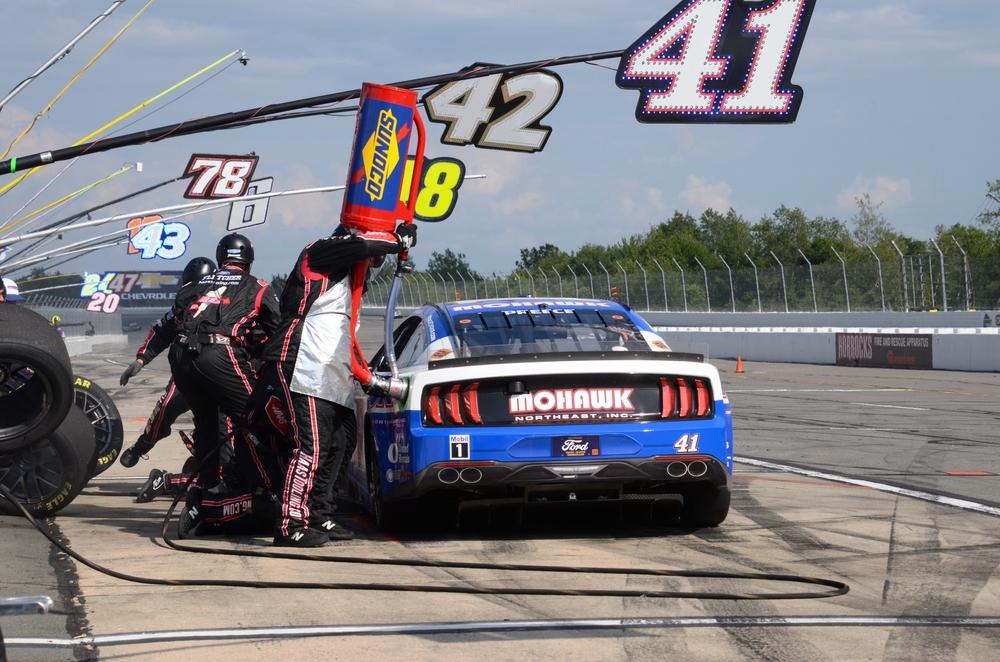
Pit stops interrupt speed to preserve the race
Few things illustrate the limits of outright speed better than the pit stop.
During an endurance event, cars need to stop at intervals for refuelling, servicing and driver changes. The car therefore cannot spend the entire race travelling at maximum racing speed around the circuit.
Stopping costs time, but refusing to stop would make it impossible to deal with the requirements of a long event.
This creates one of the central tensions of endurance racing. The team wants to cover as much distance as possible, yet it also needs to care for the car and rotate drivers.
A pit stop is therefore not separate from the competition. It is part of the process that allows the competition to continue.
For the mechanics and engineers, these stops provide opportunities to service the vehicle. For the drivers, they enable the required changes. For the team as a whole, they connect the different stages of the race.
The importance of the pit lane shows why endurance racing cannot be understood simply by watching lap times. Some of the work required to reach the finish takes place while the car is stationary.
The fastest possible approach at every moment would be meaningless if it prevented the team from completing the event.
Le Mans shows the scale of the challenge
The 24 Hours of Le Mans provides an extreme example.
The race has been held since 1923 in France and lasts for a full 24 hours. Teams use multiple drivers per car, commonly around three, and the distances involved can reach thousands of kilometres. In 2010, the recorded distance reached 5,410 kilometres.
No single fast lap can decide a challenge of this scale.
Instead, the car must keep returning to the track. Drivers must complete their turns behind the wheel. Pit stops must take place. The vehicle must survive.
The history of automobile endurance racing stretches even further back. The first organised 24-hour event took place in Ohio in 1905, showing that endurance became a recognised motorsport challenge very early in automobile history.
The central principle has remained remarkably clear. Competitors are being asked to combine speed with the ability to continue.
That is why outright pace is only one part of success.
A quick driver matters. A powerful car matters. But so do endurance, reliability, servicing and the combined performance of multiple drivers.
In a short burst, raw speed can look decisive. Over many hours, every weakness has more opportunity to appear.
Endurance racing exposes those weaknesses. It asks whether performance can survive repeated laps, driver rotations and prolonged mechanical strain.
The strongest competitor is therefore not necessarily the one capable of producing the most dramatic moment of speed. It is the team capable of remaining competitive when minutes become hours and the distance keeps increasing.
That combination of pace and persistence is what gives endurance racing its particular character. It is racing in which going quickly matters enormously, but continuing to go quickly matters even more.