
Endurance racing has existed almost as long as organised automobile competition itself. The first organised 24-hour automobile race was held in Ohio in 1905, when the motor industry was still in its early development. Less than two decades later, the 24 Hours of Le Mans began in France. First held in 1923, Le Mans developed into the oldest continuing automobile endurance race and remains one of the clearest examples of what the discipline is designed to test: driver stamina, teamwork and the ability of a racing car to remain reliable over a prolonged distance.
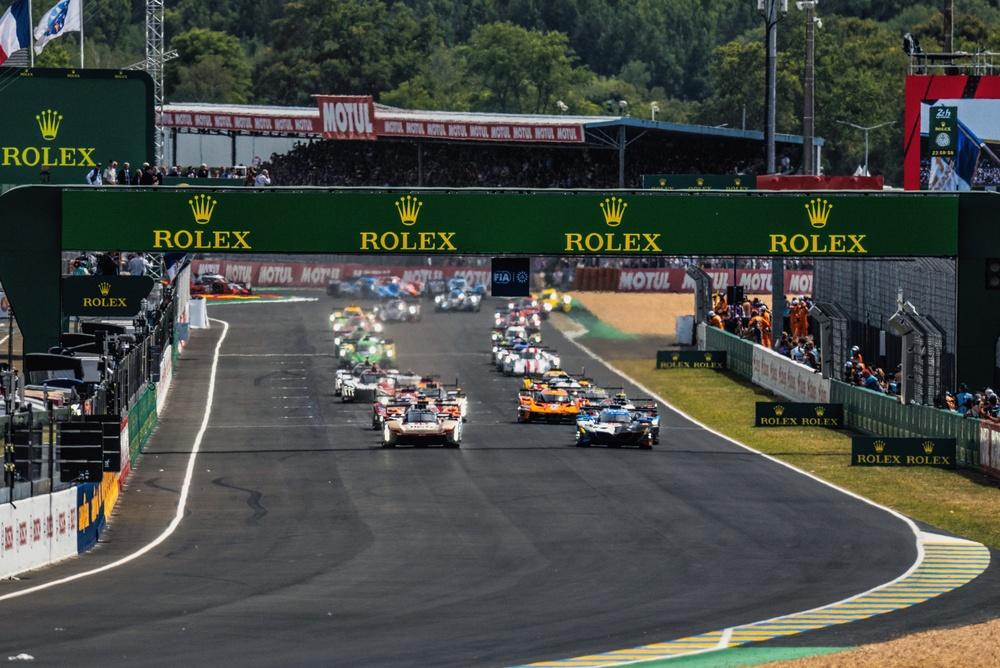
Endurance became a challenge early in motoring history
The concept behind endurance racing is straightforward.
Rather than asking competitors only to reach maximum speed over a short contest, an endurance event challenges them to cover a set distance or to travel as far as possible within a defined period.
The longer the event, the more the competition exposes weaknesses.
Drivers become tired. Cars experience prolonged mechanical demands. Teams need to maintain their work for hours rather than minutes.
That appears to have fascinated motorsport organisers from an early stage.
The world’s first organised 24-hour automobile race was held in Ohio in 1905.
This date is striking because it places the emergence of long-duration racing very early in automobile history.
Cars themselves were still developing rapidly, yet competitors were already interested in discovering whether drivers and vehicles could sustain performance over an entire day.
The endurance race therefore became both a sporting event and a demanding test of the machinery.
That dual character remains visible today.
Le Mans began in 1923
The most famous long-running example appeared in France in 1923.
The 24 Hours of Le Mans has been held annually from that period and is described as the oldest ongoing automobile endurance race.
Its defining feature is right there in the name: the event lasts for 24 hours.
This creates an extraordinary racing challenge.
Teams need to keep one car competitive through day and night while several drivers take turns behind the wheel.
Le Mans involves more than one driver for every car, with around three drivers commonly sharing a vehicle.
The use of multiple drivers is crucial because an endurance event is not intended to depend on one person driving continuously for the entire duration.
Drivers complete stints and then change during pit stops.
The source material describes endurance drivers generally being allowed to drive for around 60 to 90 minutes before switching for safety reasons.
This arrangement allows the event itself to continue for far longer than an individual driver’s stint.
The distance shows the scale of the event
A full day of racing produces enormous distances.
The record referenced for Le Mans is 5,410 kilometres, set in 2010.
That number helps put the endurance challenge into perspective.
The vehicle is required to remain in competition over thousands of kilometres of racing.
A single exceptional lap makes only a tiny contribution to that total.
To succeed, the team needs to repeat competitive laps hour after hour.
This is why endurance racing tests far more than engine power.
The driver needs experience and stamina, while the car’s durability and reliability are also tested.
A mechanical failure can bring an entire race effort into difficulty regardless of how well the opening hours have gone.
That is also why the manufacturer and engineering team have a direct interest in the result.
If a car performs strongly through an event such as Le Mans, the performance reflects not only the people driving it but also the machine they have been given.
Pit stops keep the race moving
No car simply drives the entire 24 hours without returning to its team.
Pit stops take place at intervals for refuelling, servicing and driver changes.
These stops are a defining part of endurance racing.
The car temporarily leaves the competitive flow on the circuit, but the work completed in the pits is necessary for it to return.
A driver change transfers responsibility from one competitor to another.
Refuelling enables further distance to be covered.
Servicing supports the car as it attempts to withstand a race of extraordinary duration.
Pit stops therefore show how endurance racing depends on much more than the person sitting behind the wheel.
The mechanics and engineers contribute to every stage of the event.
This team structure becomes increasingly important as the hours pass.
In a short race, a driver might be able to make the decisive difference through individual speed. In a 24-hour event, successful performance needs to be reproduced by several drivers and supported repeatedly by the people in the pits.
Le Mans tests machinery as well as people
Endurance racing has long attracted interest from automobile manufacturers, and the reason extends beyond simple publicity.
The discipline places durability, reliability and vehicle quality under competitive pressure.
A car may be powerful, but that power only matters if the vehicle can keep operating.
When a car fails during an endurance event, the result affects the driver, engineering team and manufacturer.
When it performs well, the opposite can happen. A strong racing result provides a visible example of the vehicle surviving a demanding contest.
This gives Le Mans a special place in the relationship between motorsport and engineering.
Motorsport has broader value as an arena for innovation and technological development, including developments that can influence the wider motor industry.
Endurance racing adds the requirement that technology must continue working over time.
The car is not merely asked to be fast.
It is asked to be fast repeatedly.
More than a century of the same fundamental challenge
A remarkable amount has changed between the Ohio endurance event of 1905 and modern endurance racing.
Cars, engineering and motorsport have developed enormously.
Yet the essential idea remains familiar.
A long race exposes both human and mechanical limits.
Drivers need to maintain concentration and performance. Teams need to coordinate changes and servicing. Vehicles need to remain reliable.
Le Mans has turned this basic challenge into one of motorsport’s longest-running traditions.
Since 1923, the event has demonstrated why racing for 24 hours creates a completely different competitive environment from a short race.
The clock becomes as important as the speedometer.
As one hour becomes several and hundreds of kilometres become thousands, every part of the racing operation matters.
The driver cannot win alone. The fastest lap cannot decide everything. The car cannot afford to be powerful but unreliable.
Instead, success comes from keeping all these elements functioning together.
This is what connects early endurance racing with the continuing appeal of Le Mans.
From Ohio in 1905 to France from 1923 onward, the central question has remained remarkably consistent: how far can drivers and their machines continue to perform when the challenge lasts not for a few minutes, but for hour after hour?
Le Mans gives that question its most famous stage. Twenty-four hours, multiple drivers, repeated pit stops and thousands of kilometres combine to create a race in which durability and stamina are not secondary qualities. They are part of the definition of the competition itself.