
Motor racing contains many disciplines, from Formula 1 and rallying to drag racing, drifting and track competition. Although all involve motorised vehicles and competitive performance, the structure of the events can differ dramatically. Endurance racing is distinctive because it places prolonged performance at the centre of the challenge. Teams compete over a set distance or for a set period of time, multiple drivers can share the same car, and pit stops are required for fuel, servicing and driver changes. The result is a form of motorsport in which speed matters, but the ability to maintain performance is equally important.
Time and distance define the competition
The most obvious characteristic of endurance racing is contained in its format.
A race can be organised around a predetermined distance or around a fixed period. In a timed event, the objective is to cover as much distance as possible before the period ends.
This makes duration a core competitive factor.
In a shorter race, drivers may concentrate on extracting performance over a comparatively limited number of laps. In endurance competition, the challenge continues for far longer.
Some events run for many hours. Le Mans extends the concept to 24 hours.
That additional time changes virtually every aspect of the competition.
Drivers cannot simply remain in the car indefinitely. Fuel needs to be replenished. The vehicle needs to survive prolonged racing. The team must continue functioning throughout.
The endurance race therefore becomes an accumulation of many smaller periods of competition.
No single lap represents the whole event.
Several drivers share one car
Another major difference is the use of multiple drivers.
Endurance teams commonly contain two to four drivers, with each taking responsibility for the same car at different stages of the event.
Drivers change during pit stops.
This shared structure makes the result more clearly collective than in formats centred on one driver remaining in the same car throughout the race.
The source material describes driving periods of around 60 to 90 minutes before switching, with the limits linked to safety.
That illustrates an important point about endurance.
The discipline deliberately tests stamina, but it does not simply demand uninterrupted driving from one person. Instead, endurance is managed through a team of drivers.
Each competitor must perform effectively during a stint before passing the car to somebody else.
This creates continuity between individual performances. Driver number two inherits the same race position, vehicle and mechanical condition left by driver number one.
The team therefore succeeds or fails collectively.
The cars themselves are different
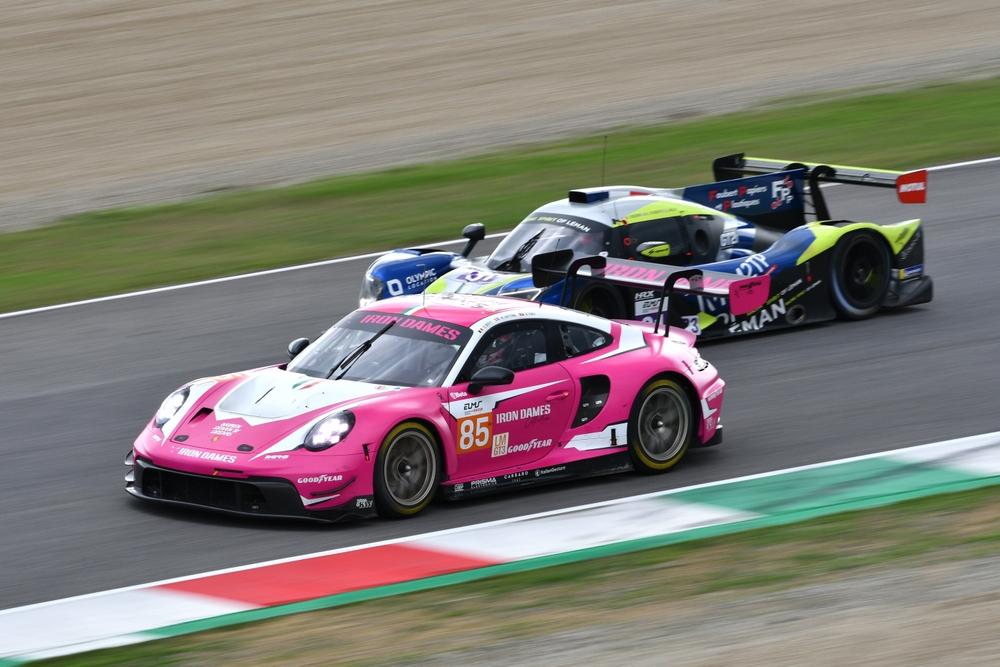
Endurance racing is also distinguished by the type of vehicle used.
The source material contrasts the closed-wheel vehicles used in endurance competition with the open-wheel cars associated with Formula 1. It also notes that endurance events take place on closed tracks.
Formula 1 is one of the world’s most prominent forms of professional car racing, but its structure is clearly different.
Endurance competition is built around keeping a closed-wheel racing vehicle operating over a lengthy event, usually with several drivers sharing responsibility.
Rallying provides another contrast.
Rallying takes place on roads rather than a conventional racing track and uses specialised rally cars. Endurance racing, by comparison, is described as taking place on closed tracks.
These differences matter because the environment and format shape what competitors need to do.
A rally crew faces one set of conditions, Formula 1 another and endurance teams another again.
All are motorsports, but the competitive problem is not the same.
Reliability becomes part of performance
Perhaps the most important distinction is the way endurance racing tests the vehicle.
The car’s durability, reliability and quality are explicitly part of the challenge.
That makes endurance competition particularly interesting from an engineering perspective.
A car does not succeed simply because it can produce strong performance for a limited period.
It needs to continue operating.
If the vehicle fails, the consequences affect the driver, engineering team and manufacturer associated with it.
This helps explain why car manufacturers have taken an interest in endurance racing.
Success offers visibility, but it can also demonstrate that the vehicle has performed well through a prolonged test.
Motorsport more broadly contributes to technological and engineering development. Endurance racing places that relationship in a particularly demanding context because vehicle reliability is directly tied to the competitive outcome.
A fast but fragile car is therefore exposed.
The event provides enough time for weaknesses to matter.
Pit stops become recurring parts of the event
The pit stop is another defining feature.
Drivers are required to stop at intervals to refuel, service the car and change drivers.
This means endurance racing alternates between periods of high-speed track activity and brief phases of intensive work in the pits.
The driver is only one participant in this process.
Mechanics and engineers contribute directly to keeping the car in competition.
This is especially significant during a very long race. A 24-hour event cannot be approached as one uninterrupted performance.
It is made up of repeated cycles of driving, stopping, servicing, changing and returning to the circuit.
These cycles are what allow the race to continue.
Le Mans embodies the endurance format
No event demonstrates these distinctions more clearly than the 24 Hours of Le Mans.
The race has been held in France since 1923 and is described as the oldest ongoing automobile endurance race in the world. It lasts for a full 24 hours and involves multiple drivers per vehicle, commonly around three.
The distances are remarkable. A record of 5,410 kilometres is listed for the 2010 race.
Such figures emphasise the fundamental difference between short-term speed and endurance performance.
A team competing for 24 hours needs drivers who can contribute repeatedly, a car capable of surviving enormous use and a pit crew able to support the entire process.
The roots of this type of competition reach even further back. The first organised 24-hour automobile race was held in Ohio in 1905.
Endurance racing has therefore been testing the ability of people and machines to last for more than a century.
That is ultimately what separates it from many other forms of motorsport.
It is not simply slower or longer racing. Its structure changes the qualities required for success.
Several drivers share one car. Pit stops are unavoidable. Mechanical durability is tested over time. The team needs to maintain performance throughout the event.
Speed remains essential, but it exists inside a larger challenge.
The race asks not only how quickly a competitor can go, but how long that level of performance can be sustained.
That additional dimension is what gives endurance racing its distinctive identity within motorsport.