
A pit stop lasts only a small part of an endurance race, but it has an important role in allowing the team to continue competing. Endurance events can require cars to remain in competition for many hours or to cover a long predetermined distance. During that time, drivers need to be changed, cars need fuel and servicing may be necessary. This means that entering the pits is not simply an interruption in the racing. It is built into the structure of the event and connects the work of drivers, mechanics and engineers.
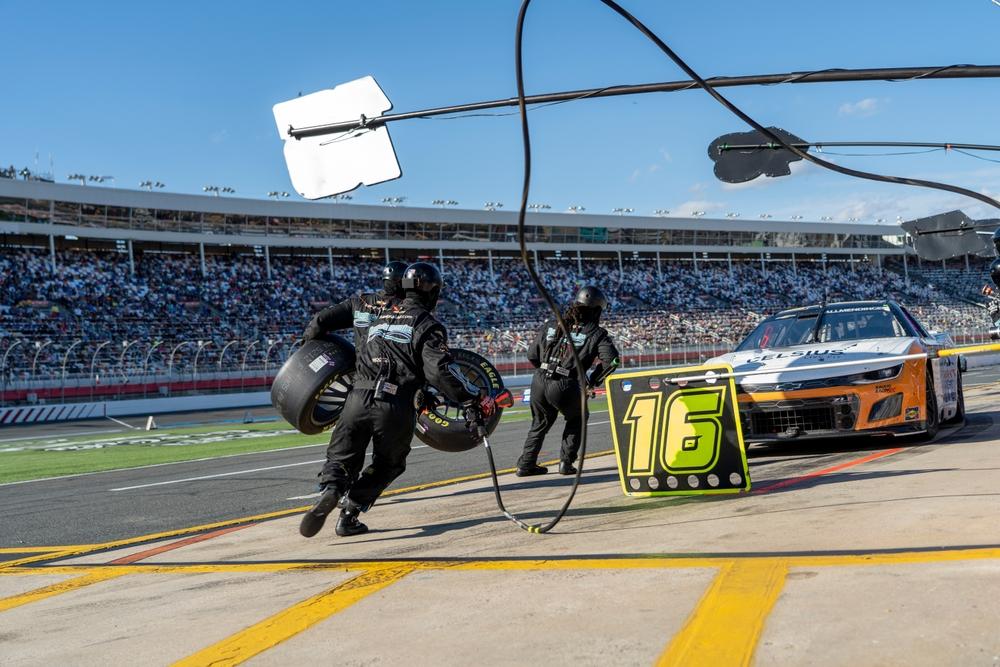
Long races make stopping unavoidable
Automobile endurance racing is organised around either time or distance. Competitors may be asked to complete a particular distance or to travel as far as possible within a set period.
In either case, the car needs to remain competitive for much longer than it would during a short race.
Pit stops make this possible.
The source material identifies three key activities that occur during stops: refuelling, servicing the car and changing drivers. Each serves a different purpose, but all support the same basic objective of keeping the vehicle in the race.
Refuelling deals with the obvious practical requirement of continuing to operate the car over a long distance.
Servicing gives the team an opportunity to attend to the vehicle during the competition.
Driver changes deal with the limits placed on how long an individual can remain behind the wheel.
Together, these functions show that endurance competition has to be managed as a process rather than approached as one uninterrupted sprint.
Every return to the pit lane divides the event into stages. A driver completes a period on the track, the team carries out necessary work, another driver may take over, and the car returns to racing.
This cycle can continue repeatedly until the event has finished.
Driver changes make the pit lane essential
Endurance racing commonly involves teams of two to four drivers sharing a single vehicle.
Drivers are required to switch rather than remain behind the wheel continuously. The material describes drivers being permitted to drive for periods of around 60 to 90 minutes before changing, with safety as the reason for these restrictions.
The pit stop is therefore the point at which the human side of endurance racing is reset.
One driver arrives after completing a demanding stint. Another takes responsibility for the next part of the race.
The car remains the shared competitive object throughout.
This makes endurance racing a genuinely collective activity. The final position does not belong to the performance of a single person. It reflects the efforts of all the drivers who have shared the vehicle.
Driver changes also demonstrate why stamina needs to be managed rather than merely tested until exhaustion.
The format challenges drivers, but it simultaneously recognises the importance of safety. A long event can therefore continue for many hours while individual drivers operate in shorter periods.
In the 24 Hours of Le Mans, for example, each car has more than one driver and teams commonly use around three. This arrangement allows the race itself to last 24 hours while the human workload is divided among several competitors.
Without the pit stop, this shared driving structure would not function.
Servicing keeps the mechanical challenge alive
The car faces a different problem.
Unlike the driver, it cannot simply leave the race and be replaced by another vehicle each time a stint ends. The same competition car needs to continue.
This is why servicing during pit stops is so important to the endurance format.
The race is partly a test of durability, reliability and the quality of the vehicle. A car that cannot withstand the event may fail regardless of how capable its drivers are.
Pit servicing provides the engineering team with opportunities to support the vehicle during the race.
This does not remove the reliability challenge. Quite the opposite: the need to keep the same car functioning over many hours is what creates that challenge in the first place.
A vehicle may perform very well at the start, but endurance racing requires it to continue doing so as the event progresses.
When something goes wrong mechanically, the consequences extend across the team. The driver loses competitive time, the engineers face the failure of the machinery they have prepared, and a manufacturer associated with the car sees its product’s durability tested publicly.
The pit lane therefore becomes the place where engineering support meets competition.
On the circuit, the car demonstrates its speed. In the pits, the team works to make sure that speed remains available for the next stage.
A stop costs time but supports the overall objective
Endurance races are won by covering distance effectively over the full event.
A pit stop temporarily prevents the car from adding distance at racing speed. In that narrow sense, stopping seems contrary to the aim of the competition.
Yet the car needs those stops to continue.
This is one of the distinctive strategic tensions created by endurance racing.
The fastest imaginable race would involve never slowing down and never entering the pit lane. The practical realities of fuel, servicing and driver rotation make that impossible.
Teams therefore need to accept short interruptions in pursuit of a much longer competitive objective.
This distinguishes endurance competition from a simple exercise in maximum pace.
The race is not decided solely by what happens when the car is moving fastest. It also depends on what happens when the car leaves the circuit, stops in front of the crew and prepares to return.
The mechanics are therefore participating directly in the competitive process.
Their work supports the car’s continued operation, while the drivers depend on successful stops to exchange responsibilities.
This is one reason endurance racing tests an entire organisation rather than only the individual controlling the vehicle.
Le Mans magnifies the importance of pit work
The 24 Hours of Le Mans demonstrates this clearly because of its extraordinary duration.
Held since 1923, the race continues for a full day. The distances covered are correspondingly large, with the record listed at 5,410 kilometres from 2010.
Over such a period, the idea that one car could simply run continuously without fuel, servicing or driver rotation is incompatible with the structure of the event.
Pit stops become recurring milestones.
Each one gives the team an opportunity to prepare for another period of racing.
As the hours accumulate, the relationship between track performance and pit work becomes increasingly obvious. The vehicle needs both.
A rapid car that cannot remain reliable has a problem. A durable car that cannot maintain competitive pace has another. Poorly managed stops can also undermine the work being done elsewhere.
The endurance format brings all these dimensions together.
The first organised 24-hour automobile race took place as early as 1905 in Ohio. The fact that prolonged competition appeared so early in motorsport history suggests that the challenge of making both humans and machines last has long been part of the appeal.
Modern endurance racing retains that fundamental idea.
Pit stops are central because they allow the team to respond to the practical realities created by long-distance competition.
They enable drivers to rotate. They provide opportunities to refuel. They allow the car to receive service. Most importantly, they make it possible for the entire combination of driver, machine and crew to keep competing.
A pit stop may appear to be a pause in the action, but within endurance racing it is better understood as one of the mechanisms that sustains the action.
The vehicle enters, work is performed, responsibilities may change and the car returns to the circuit.
That repeated process helps transform endurance racing from a simple test of speed into a prolonged test of organisation, stamina and mechanical reliability.