
Endurance racing is one of the clearest examples of motorsport being about more than outright speed. The aim is either to cover a predetermined distance or to travel as far as possible within a set period of time. That basic format changes the nature of the competition. Drivers need enough pace to remain competitive, but they also need the stamina to perform consistently. At the same time, the car must continue to function over a prolonged race rather than simply deliver maximum performance for a short period. This combination makes endurance racing a test of people, machinery and the team working around them.
A long race creates a different type of challenge
In endurance racing, the duration or distance of the event plays a central role. Teams may race for a set amount of time or attempt to complete a defined distance. Some events can last for many hours, meaning that the demands placed on both the car and the people involved continue far beyond those of a short race.
This naturally changes the priorities. A fast lap remains useful, but one lap tells very little about whether a team can remain competitive throughout an endurance event. Drivers have to keep performing, while the vehicle needs to withstand continuous use.
The format also means that a single driver generally does not complete the whole event. Endurance teams commonly consist of several drivers sharing the same car. During the race, they take turns behind the wheel. This makes teamwork especially important because the car and the overall race effort belong to the entire team rather than to one individual competitor.
Driver changes are not simply an optional tactical idea. The source material describes drivers switching after periods behind the wheel, with limits intended to support safety. This reflects one of endurance racing’s defining characteristics: human stamina is being tested, but the format also recognises that continuous concentration behind the wheel has limits.
Once several drivers are sharing the same vehicle, consistency becomes particularly important. Every driver contributes to the same race result. A strong performance from one person cannot completely compensate if the car loses large amounts of time later or if another part of the race goes poorly.
That creates a different relationship between individual and team performance. The driver remains essential, but the final result depends on the combined effort over the entire event.
The car must survive as well as perform
The vehicle faces its own form of endurance test. An endurance race is designed not only to challenge driver experience, power and stamina, but also to test the durability, reliability and overall quality of the car being used.
A powerful car therefore has no guarantee of success. If that performance cannot be maintained for the required period or distance, outright speed becomes less valuable.
This is one of the most important distinctions between endurance racing and forms of motorsport in which the competitive period is shorter. In endurance competition, mechanical reliability remains relevant from the beginning of the event until the finish.
The longer the car is required to run, the greater the importance of keeping it functioning. Components and systems are continuously being used while the vehicle is driven at racing speeds. Even if the car begins strongly, a failure later in the race can undo the work already completed.
That is why the consequences of a mechanical problem extend beyond the driver. The engineering team and the manufacturer also have an interest in how well the vehicle performs throughout the event.
For manufacturers, an endurance race can therefore demonstrate something beyond raw performance. A competitive result can also reflect the vehicle’s ability to continue operating through an extended motorsport challenge.
The connection between racing and engineering is particularly clear here. Motorsport has long been linked with technological development, and endurance racing places the reliability of the vehicle directly inside the competitive challenge.
Pit stops form part of the race itself
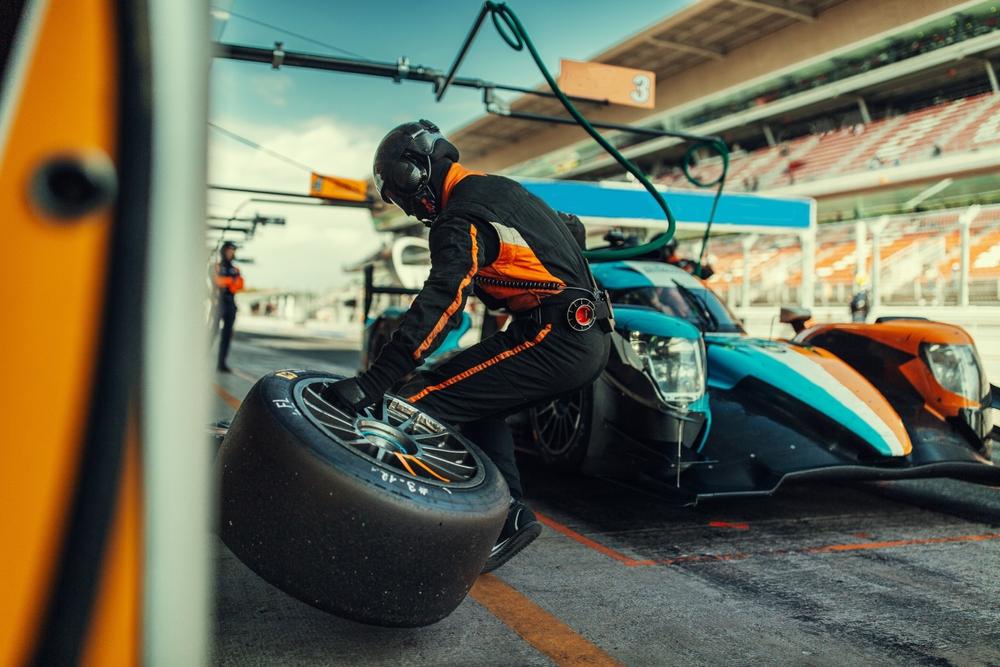
A long-distance event cannot be treated as uninterrupted driving from start to finish. Pit stops are required during the race so that teams can refuel, service the car and change drivers. These stops form part of the structure of endurance competition.
A pit stop temporarily takes the car away from racing speed, but it allows the team to continue competing over the longer period. That creates an interesting balance. Time spent in the pits is time that cannot be spent covering distance on the circuit, yet the necessary work cannot simply be ignored.
Refuelling allows the car to continue, servicing addresses the vehicle during the event, and driver changes make it possible for the team to share the physical and mental demands of the race.
Each stop therefore connects several parts of the competition. The driver, mechanics and the wider team all have roles in ensuring that the car can return to the circuit and continue.
This helps explain why endurance racing is difficult to reduce to a simple comparison between individual drivers. A driver may produce excellent laps, but the race involves many additional factors. The team must keep the car running, complete its stops and manage changes over a much longer competitive period.
The longer the event becomes, the more visible this collective structure is.
Le Mans represents endurance racing on its largest scale
The 24 Hours of Le Mans is one of the strongest examples of the format. First held in 1923 and staged in France, it is described as the world’s oldest continuing automobile endurance race. The event lasts for an entire 24 hours and has become closely associated with the idea of testing both drivers and cars over a prolonged period.
Le Mans involves many competitors and more than one driver for each car, with teams commonly using around three drivers. The shared driving responsibility demonstrates how endurance racing differs structurally from a race built around a single driver completing the entire event.
The distance covered can be enormous. The source material records a distance of 5,410 kilometres in 2010, illustrating just how far a car can travel during one 24-hour race.
That distance also puts the concept of durability into perspective. A car competing at Le Mans is not simply expected to produce a handful of quick laps. It must repeatedly return to the circuit after pit stops and continue operating throughout a full day and night of racing.
The event therefore brings together the defining aspects of endurance motorsport: prolonged driving, multiple drivers, pit stops, vehicle servicing, reliability and sustained competitive performance.
Automobile endurance competition has much older roots than Le Mans itself. The first organised 24-hour automobile race took place in Ohio in 1905. That early event demonstrates that testing cars and drivers across long periods has been part of motorsport almost since the early development of competitive motoring.
More than a century later, the essential challenge remains recognisable. The goal is not simply to be fast for a moment. Drivers must perform repeatedly, the team must keep functioning, and the car must continue to withstand the demands placed upon it.
That is what gives endurance racing its distinctive character. Every part of the team is being tested at once. The driver needs speed, experience and stamina. The engineers need a car capable of remaining reliable. Pit crews must support the vehicle during the event. The manufacturer has an interest in seeing its machinery demonstrate quality and durability.
When all of these elements remain effective over the required time or distance, the result is something very different from a brief contest of outright pace. Endurance racing rewards the ability to keep competing, lap after lap and hour after hour, until the distance has been completed or the clock finally runs out.